

Birth Trauma: Is THAT What I've Been Experiencing?
Like many mom-conversations go, Sara asked about the age difference between my two kids and how I felt about it. She told me that although her daughter was begging for a sibling and her husband was also ready, she wasn’t prepared to get pregnant again just yet. She was conflicted about her timing tho, noting her age and the pressure she was feeling to have another baby.

I met Sara and her 4-year-old daughter, Claire, at our local playground earlier this week. Claire instantly gravitated to my 5-year-old son and within moments they were chasing balls together, holding hands and laughing. Having just moved to San Diego from Boston, she was excited to meet us.
Like many mom-conversations go, Sara asked about the age difference between my two kids and how I felt about it. She told me that although her daughter was begging for a sibling and her husband was also ready, she wasn’t prepared to get pregnant again just yet. She was conflicted about her timing tho, noting her age and the pressure she was feeling to have another baby.
I empathized with her situation and shared some of my own personal experience, as well as my professional experience as a psychotherapist supporting women on their journey through motherhood. I offered myself as a local resource given my knowledge of San Diego’s network of reproductive health providers.
A few days later we met again by the swings. Sara jumped right into the conversation, saying, "you know, I think I could probably use some help from someone like you. I'm pretty sure I suffered from some postpartum stuff and that's what's holding me back from having another baby." She went on to tell me about her difficult pregnancy, challenging labor and unplanned cesarean birth that left both her and Claire in the hospital for several days. The experience was distressing and she was anxious about becoming pregnant again. She had wanted an unmedicated, natural birth and was understandably afraid of having a repeat similar experience with her next child.

I spent some time talking with Sara about how her traumatic birth might be impacting her. As I spoke her face softened and her head nodded. She appeared to feel validated by my explanation: that trauma after birth is REAL.
While many around her would like Sara to move on and be grateful for a happy and healthy child, Sara is still reacting to her birth experience with Claire. Although Claire had suffered no long-term effects, Sara did. And her daughter’s health does not negate Sara’s experience and the anxiety and fear left in the wake of her birth experience. As we talked more, I stressed that it’s not the specifics of the birth that is traumatic, but one’s perception of these events. This is such a key aspect of trauma.
What Are The Symptoms of Birth Trauma?
Post traumatic stress disorder (PTSD) is a mental health problem that some people develop after experiencing or witnessing a life-threatening event, like combat, a car accident, a natural disaster, or sexual assault. However, a traumatic experience can be any experience that involves the threat of death or serious injury to you or someone close to you, like your baby (birth trauma or postpartum PTSD). Again, it's your perception of your childbirth that matters most. It is less important whether the hospital staff were in communication about recommended procedures than your interpretation of what happened.
Common symptoms of women who’ve experienced birth trauma may include:
- Feeling socially isolated
- Difficulty bonding with their baby
- Lonely
- Angry
- Depressed
- Irritable
- Difficulty sleeping
- Anxiety or panic attacks
- Worry excessively about the health of their babies
- Worry that their child might die
- Flashbacks or memories that repeat over and over about medical procedures or the behavior of medical staff.
- Nightmares
Why Some People Experience PTSD Postpartum
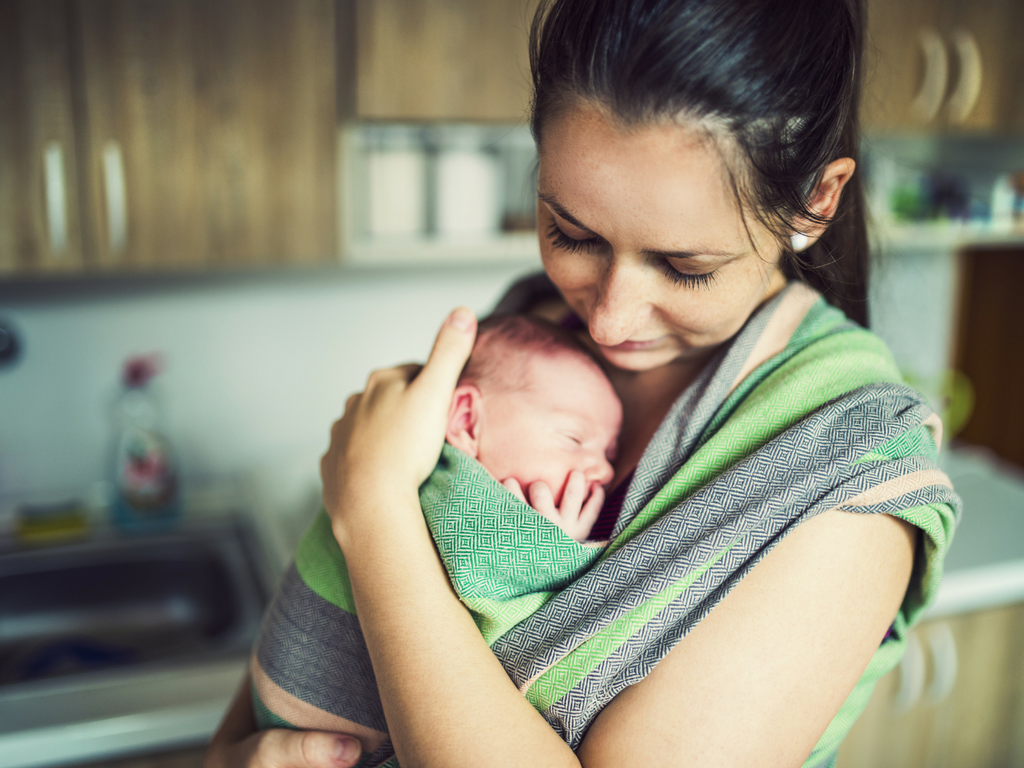
It’s not always the dramatic events that trigger childbirth trauma but other factors such as a loss of control, the intimidating, aggressive or difficult attitudes of people around you, not feeling heard, or a lack of informed consent to medical procedures.
Risk factors for Postpartum PTSD include a complex mix of objective factors, such as the type of delivery, ability to feed as planned, etc, and subjective factors like those mentioned above. Additional risk factors include:
- Induction
- Length of labor
- Feelings of loss of control
- Unwanted medical intervention
- Traumatic or emergency deliveries/cesarean
- Lack of support from partner or medical staff
- Impersonal treatment
- Not feeling listened to
- Lack of information or explanation
- Lack of privacy and dignity
- Fear for baby's safety
- Stillbirth or loss soon after birth
- Birth of a disabled baby
- Baby’s stay in NICU
- Poor postnatal care
- Previous trauma (childhood, with a previous birth, domestic violence)
- History of anxiety or extreme fear of childbirth
- History of abortion or infertility
How common is Birth Trauma?
It’s estimated that approximately 9% of new mothers in Western societies experience full blown post traumatic stress disorder. However, research shows that 25-34% experience subsyndromal symptoms (symptoms that don't meet the diagnostic criteria for PTSD)! So while not meeting diagnostic criteria for PTSD, up to a third of mothers experience symptoms like intrusive thoughts and memories that may stimulate feelings of fear, anxiety or helplessness that interfere with daily life. That's a huge number!
It's important to remember that while mothers most commonly receive treatment for postpartum post traumatic stress, their partners and even their medical providers may also suffer.
Why You Should Seek Help
There are numerous potential consequences for women who experience a traumatic birth. They may avoid routine follow-up medical care because it reminds them of their childbirth experience. Like Sara, they may fear subsequent pregnancies and are statistically shown to be less likely to have subsequent births.
Those who do have another child are more likely to have an epidural or a scheduled cesarean; they are less likely to breastfeed and more likely to experience challenges bonding and attaching with their newborns. They’re also more likely to experience difficulties in their relationships and sexual dysfunction. Moms who suffer from Postpartum PTSD are more likely to suffer from depression, which also impacts bonding and attachment with their baby.
In part 2, we’ll look at ways to avoid the effects of birth trauma and ways to support healing. If you’re not sure you can wait to read part 2, please don’t hesitate to give me a call. I’m a licensed clinical social worker in the Banker’s Hill neighborhood of San Diego, California. I’m passionate about helping families cope with trauma and other challenges after bringing home their baby. You can reach me at 619.780.3277 for your free in-person 30 minute consultation.

Wondering When It Gets Easier, Mama? Why it's harder than you imagined to mother an older infant +7 tips to help you through
Your baby is 6 months. Perhaps 8 or 10 months old. You thought you'd "have it together" by now. Or at least feel like a version of your former self. You've managed to piece together some semblance of a routine and take care of the basics- you go food shopping, hit the park after the second nap occasionally. But you feel anything but together.

Your baby is 6 months old. Perhaps 8 or 10 months. You thought you'd "have it together" by now. Or at least feel like a version of your former self. You've managed to piece together some semblance of a routine and take care of the basics- you go food shopping, hit the park after the second nap occasionally. But you feel anything but together.
You crossed the threshold into motherhood many moons ago, tho some days it feels like it's harder than the first week after you brought your baby home. You knew the media's portrayal of moms was too good to be true, but this?! You had no idea how hard it could be.
As a mother of 2 and a psychotherapist specializing in maternal mental health, i spend a lot of time reminding my clients (and myself) just what an enormous transition motherhood is.
Reasons why parenting hasn't gotten easier, yet
Becoming a mother is the biggest transition a woman goes through in her adult life. Many women I see in my support group and my private practice struggle immensely with the loss of self, figuratively and literally. There's no way to prepare for the jolt that assaults the mind and body as you pour every ounce of energy into another human, selflessly abandoning your own basic needs like sleeping, showering, using the bathroom and eating to ensure the health and wellness of your baby. Let me unpack that for you.
Sleep
The average infant isn’t sleeping through the night at 6 months, despite the myth that society continues to perpetuate about sleeping like a baby. It's just that, a story. Babies. Don’t. Sleep. At least most or many don't sleep well at this age. It's not uncommon for older infants to routinely take 30-minute naps. And wake 2-4 times a night. Or more.
As you well know, if baby doesn't sleep, mom doesn't sleep. Lack of sleep is correlated with both depression and anxiety. Sleep deprivation makes life harder, which is why it's is used as a method of torture!
Many new moms anticipate they'll have time to clean the house, prep dinner and maybe take a shower when their baby naps. Never had they considered the reality of holding, wearing, bouncing or driving their tired or crying child to try and induce sleep and eek out a 30-40 min nap here and there. That downtime you imagined to effortlessly have-- poof! Being a parent is a sacrifice for sure; you knew that cognitively of course. But when you haven't been able to put your child down to nap since they were two weeks old and it's 85 degrees outside and your walking up and down the street so they'll fall asleep-- it's real.
Relationships
Many women I work with share how struggles with their partners seemingly erupt out of nowhere. Relationships that previously had no cracks feel like they're crumbling. As I prod and question I learn more about the communication gap and the resentment that builds when responsibilities fall on the shoulders of one person more than another. When needs go unmet, feelings of not being appreciated, thought of, cared for and loved begin to grow.
Identity Loss
It's not unusual that during the very early stage, if mom is breastfeeding or recovering from birth she spends many weeks at home, bonding with her newborn. But often, I hear that as partners return to work and resume regular social activities, mom feels more isolated from friends, society and her former identity. She's no longer working and no longer engaging in the activities that previously identified her as the person she though of as herself. Instead she's counting poop diapers and bouncing a baby on a ball so she can maybe check her email or do something for herself if she can get the baby into a bed.
Overwhelm
These aren't unusual issues to face as individuals and couples transition into parenthood but they shouldn't be ignored. So many moms I work with talk about the overwhelm kicking in at this stage. They think it should get easier by now. That having a routine should help. But the sicknesses and lack of sleep bookended by full-time jobs and no babysitter leave little time for breathing let alone a date with her partner.
When we have no time to play, to connect and to nurture ourselves, life feels hard. When you've been going and going, devoting all of your energy to learn about this new incredibly important member of your family, to meet their every need, it's intense.
Small steps towards change
When you reach the point of feeling overwhelmed, of questioning how things will get better and why they feel harder every day, it may be time to consider making some small changes. Here are 7 recommendations I often make to families I work with that are struggling during this stage of their transition to parenthood:
- Open up. Communicate with your partner. Share your feelings, your expectations, desires. Let them know how they can help you feel more supported during this ongoing transitional time. As much as we might like to have married a mind-reader, relationships are built on communication that must be fostered.
- Get more sleep. Discuss your sleep needs with your partner. Try and develop a plan to get more sleep if you think you aren't getting enough. If you're getting less than 5 hours in a night, that's not enough for most.
- Eat well. Make sure you're eating well. Three meals plus snacks. Balanced meals with adequate fats and proteins are important, especially if you're breastfeeding.
- Move. Walking is a great place to start. Physical exercise has been shown to release endorphins, which naturally trigger positive feelings helping to reduce levels of depression and anxiety, and can actually help prevent depressive symptoms.
- Get outside! Being in nature is not only restorative but can improve your positive outlook on life and your ability to cope and recover from stress and illness.
- Schedule breaks. Schedule time for you, even if you have no hobbies, don't play sports and have no interests that come to mind. Schedule a time for you to do whatever you choose. Regularly.
- Connect with others. Join a support group of other new moms. Find a way to connect with people and activities that you enjoy and bring joy to your life.
And lastly, ask for help! If you're not sure if what you're experiencing is part of the normal transition to motherhood or something more, like postpartum depression or anxiety, I encourage you to reach out for help from a therapist trained in maternal mental health. Many people are surprised to learn that they can develop a perinatal mood or anxiety disorder at 6, 8 or even 12 months postpartum. Here are some of the symptoms of perinatal mood or anxiety disorders (aka postpartum depression or anxiety).
It's not realistic nor do I anticipate that someone would adopt all of these changes at once. I'm a strong believe that small acts change lives. See if you can find just one thing from the list above that you can do this week to help improve the way you are feeling. What will it be? Make a commitment! I'd love to hear your plans for change in the comments.
If you're reading this article and thinking about a friend or loved one, you can help them get the support they need. If you'd like some tips on how to do that you might find this article useful. If you're in San Diego, please feel free to reach out. I maintain a private practice in the Banker's Hill neighborhood where I women struggling with infertility, loss, and pregnancy and postpartum mood and anxiety disorders.. I offer a free 30 minute in-person consultation to find out if I'm the right therapist for you. Postpartum Support International (PSI) is a national organization that maintains a warmline and a list of trained providers specializing in Maternal Mental Health. If you’re in San Diego, CA, The Postpartum Health Alliance is our local chapter of PSI and a wonderful resource.

Reducing the Stigma of Maternal Mental Health Disorders
Advocates are hopeful that by normalizing the prevalence of Perinatal Mood and Anxiety Disorders (PMADs), more women will understand the differences between the baby blues and postpartum depression. Greater awareness will allow for the realization that “something’s not right”— with me, my wife, my sister, my daughter, and thus more screenings for prenatal and postpartum depression and anxiety. PMADs are very treatable with professional help. With help you will feel better.

May is Maternal Mental Health Awareness Month. It’s a month to raise awareness for postpartum depression and anxiety and just how prevalent it is—One in seven! It’s a month to educate people about postpartum PTSD and that you CAN in fact be traumatized by your birth. It’s also an opportunity to let our community know that some women are at a higher risk for developing postpartum psychosis (a personal or family history of bipolar disorder increases her risk). Many are surprised to know that up to 80% of new moms experience the baby blues, it’s that common! Perinatal Mood and Anxiety Disorders (PMADs) are the number one complication of pregnancy.
Advocates are hopeful that by normalizing the prevalence of maternal mental health disorders, more women will understand the differences between the baby blues and postpartum depression. Greater awareness will help people detect when “something’s not right”— with me, my wife, my sister, my daughter, and hopefully lead to more screenings for prenatal and postpartum depression and anxiety. It's estimated that less than 50% of women struggling with a PMAD seek treatment, despite the fact that they're extremely treatable with professional help. Some reports estimate as few as 15% of women who struggle seek treatment, though it's difficult to know for sure since shame and stigma prevent many from reaching out.
There are many ways to support the mental health of women and their families during the childbearing years. Below are 5 ways that you can help reduce the stigma of maternal mental health disorders and advocate for greater awareness in our community.
5 Ways to Advocate for Maternal Mental Health
- Join your local chapter of Postpartum Support International. In San Diego, our chapter is called the Postpartum Health Alliance. I’m proud to volunteer my time as the Outreach Co-Chair and serve as a warmline volunteer. There are loads of ways to help build awareness and educate your community through your local organization.
- Display a Blue Dot—the new national symbol for Maternal Mental Health. You can purchase your magnet or sticker here. Not only are you supporting this important cause with your financial contribution, but you’re letting those around you know that you’re an aware and concerned citizen; It’s a conversation starter that will let more people know about PMADS and the risks to moms and babies who go untreated.
- Write letters to congress in support of the Bringing Postpartum Depression Out of the Shadows Act of 2015! That will provide grants for screening and treatment for perinatal mood and anxiety disorders.
- Participate in your local Climb Out of the Darkness hike in June to raise awareness of maternal mental health disorders. These events are coordinated by local volunteers through Postpartum Progress. To join San Diego’s hike, contact Julie Thorpe
- Don’t forget to ask the mothers you love and care for about their mental health: How are you sleeping? How are you eating? How are you feeling? If you're not sure how to address someone you think is struggling, this article provides some helpful strategies.
If you suspect that you or someone you love has a perinatal mood or anxiety disorder, reach out for help today. Rachel Rabinor, LCSW is a psychotherapist in private practice; she helps women struggling with their transition to and through motherhood in her San Diego office. She also offers in-home counseling and Walk and Talk Therapy. For resources outside of San Diego, contact your local chapter of Postpartum Support International.

Spread the Word: Ask that New Mom About Her Mental Health #AskHer
When a woman is pregnant people are so eager to chat, engage and support her. Doors are held open by strangers. Family and friends gather to shower the expectant mother and her baby to be. Couples take babymoons to celebrate their time together as a couple and the new beginning that lies ahead. However, once baby is born, it’s not uncommon for mothers to be left behind while their new baby becomes the focus of attention— theirs and everyone else’s.

May is Maternal Mental Health Awareness Month worldwide, and today kicks off the May Campaign (May 2 - 6, 2016). The goal of the May Campaign is to increase knowledge about and awareness of the serious and devastating emotional complications that many women experience during pregnancy and after the birth of a child.
When a woman is pregnant people are so eager to chat, engage and support her. Doors are held open by strangers. Family and friends gather to shower the expectant mother and her baby to be. Couples take babymoons to celebrate their time together as a couple and the new beginning that lies ahead. However, once baby is born, it’s not uncommon for mothers to be left behind while their new baby becomes the focus of attention— theirs and everyone else’s.
This year the May Campaign is focusing on the importance of shifting the conversation from baby back to mom and encouraging you/me/us to #AskHer about her mental health. Ask the mothers you love and care for about: How are you sleeping? How are you eating? How are you feeling?
Why should you #AskHer?
You might be wondering why it's so important to ask her. One in seven women experience postpartum depression. There are many risks to both mom and baby if postpartum depression or anxiety goes untreated, including: a lower quality of life for mom, a decreased ability to function at home and at work, recurrent depression and suicide. Yes, suicide!
An infant with a mother whose depression goes untreated is at risk for an insecure attachment with their mother and delays in cognitive development. These are significant risks to both mom and baby.
But it doesn’t stop there. According to research, half of all men whose partners have postpartum depression are depressed themselves. Additional risks include a decrease in care of other children in the home and an increase in overall stress and discord within the family unit.
How to help a postpartum mom you’re worried about:
If you’re not sure if what she’s experiencing is part of the normal postpartum adjustment to motherhood or something more serious, this article can help you learn about 3 Differences Between Postpartum Depression and the Baby Blues. If you’re worried about her, below are three things you can do to provide support.
- Speak Up! Share your concern for her. Most struggling moms are relieved to hear there’s actually something wrong. Feeling so overwhelmed, it’s difficult to imagine how they’ll manage if what they’re experiencing is truly normal. This article here talks more about why it’s important for YOU to say something.
- Call her local chapter of Postpartum Support International. You can get her connected with the warmline, which can provide her with referrals to trained therapists and local support groups. There are even online groups if needed. If you can call with her, that’s even better.
- Be there for her. Listen to her. Hold her baby so she can shower, or rest. Make her food. Clean her house. Walk her dog. Fold her laundry. Listen.
At the end of the day, please don't forget to #AskHer. Ask the mothers you love and care for about their mental health: How are you sleeping? How are you eating? How are you feeling? If you suspect that you or someone you love is struggling with a perinatal mood or anxiety disorder, reach out for help. Rachel Rabinor, LCSW is a psychotherapist in private practice. She sees women struggling with their transition to and through motherhood in her private practice in San Diego. She also offers in-home counseling to help ease this transition See above for other San Diego and national resources.

How to #StartAsking for Support: The Journey of Secondary Infertility
You have a child, or maybe two or three. You want to grow your family but it's been 6 months or 12 and still nothing. Or you've gotten pregnant but have miscarried. Again, perhaps.
You discover on your own through your late night dates with google what you've got—Secondary infertility. No one's said it but that's what you've got.

This week is National Infertility Awareness Week (April 24-30, 2016) and the theme this year is “#StartAsking.” One of the goals of the #StartAsking campaign is to raise awareness, reduce the stigma and encourage people struggling to get the support they need.
While infertility itself is seldom discussed at dinner parties, secondary infertility is even more of a hush hush subject. Sharing your experience with secondary infertility can help invite those who love you to advocate for you and support your family during this challenging time.
What is Secondary Infertility?
You have a child, or maybe two or three. You want to grow your family but it's been 6 months or 12 and still nothing. Or you've gotten pregnant but have miscarried. Again, perhaps.
You discover on your own through your late night dates with google what you've got—secondary infertility. No one's said it but that's what you've got. According to Resolve, The National Infertility Association, secondary infertility:
is the inability to become pregnant, or to carry a pregnancy to term, following the birth of one or more biological children. The birth of the first child does not involve any assisted reproductive technologies or fertility medications.
Why hasn’t anyone mentioned it, you want to know? You wonder why your doctor shrugged you off and told you to keep trying. Are they ignorant? Optimistic? Lazy? What are they waiting for!?
There are so many complicated aspects to secondary infertility and coping with those who love you but who just don't get it. But the only way for them to know how hard it is and how lonely it is, is if we #StartAsking them to take a peek inside your world, to pay attention to your struggle, and understand what it’s like to experience secondary infertility.
Consider sharing this list with them as a way to help them understand what you’re going through. Tell them the number of the struggle listed below that's hardest for you today. Add your own. Let them in. Let them help you!
Common Struggles of Secondary Infertility
- You’re depressed and overwhelmed that you might not have another baby.
- You're mourning a loss. The loss of a baby. The loss of your dreams. Your life isn't going as planned and you have no control. You feel helpless.
- Your relationship is strained— it can be difficult to get on the same page about treatments and to connect on a deeper level outside of your timed TTC (trying to conceive) "appointments".
- The judgement— You feel judged in online communities and sometimes in the real world too because you have a child already and others don't. You wish you could tell them— there's enough sorrow to go around, folks!
- The appointments! Who has time for all the appointments (the other kinds!)? Your RE, OB, the HSG, the routine ultrasounds. Let's not forget your acupuncturist! All the work you need to miss or childcare you need to arrange. It's a LOT.
- You struggle with envy as those around you, unintentionally or not, become pregnant.
- Anniversaries hurt- your due date, when you had your (first/second/third) miscarriage, the holidays that coincide with those now infamous dates that are forever marred.
- The well meaning but unintended hurtful things your friends and family say in an effort to comfort you.
- Your child(ren). Yes- so lucky to have that source of light. but dealing with the emotional weight of repeat losses, the TWW (two week wait), negative tests... it's intense. If you'd like some suggestions on maintaining your bond with your child through this dark stage, you might find this article helpful.
- Your physical pain. The hormonal impact of infertility drugs- the anxiety, mood swings, weight gain. Or the nausea that comes with each hopeful pregnancy.
If you feeling inspired to #StartASking for support, consider sharing this article with someone you love who can help you through your journey.
If you’re struggling with primary or secondary infertility and think you could benefit from the support of a trained psychotherapist, reach out! In San Diego, call Rachel Rabinor, LCSW for a free 30 minute in-person consultation. She maintains a private practice in the Banker’s Hill neighborhood where she specializes in Maternal Mental Health including infertility and loss. Resolve is a great resource for those outside of San Diego.

3 Reasons to Try Walk and Talk Therapy
Walk and Talk Therapy is just that—walking while talking with a trained therapist. It’s exercise but not cardio. Collaborative and professional. Walk and Talk is a useful modality for many people. Anyone suffering from anxiety, depression, coping with grief or loss, or feeling stagnant in life may find it beneficial.

I just hung up the phone with a colleague who wanted to pick my brain about providing Walk and Talk Therapy. Our call got me thinking about all the incredible benefits of this, seemingly to some, out-of-the box therapy, and why more people should consider trying it.
Walk and Talk Therapy is just that—walking while talking with a trained therapist. It’s exercise but not cardio. Collaborative and professional. Walk and Talk is a useful type of treatment for many people. Anyone suffering from anxiety or depression, coping with grief or loss, or those feeling stagnant in life may find it beneficial. This article talks about the benefits for new moms and also talks more about what Walk and Talk is, and what it isn’t (How walk and Talk Will Change Your Life, Mama).
Here are three MORE reasons to consider Walk and Talk Therapy:
Walk and Talk Therapy allows you to take small steps towards your goals. It’s a great metaphor. With each step, you’re moving forward in life, leaving your problems behind figuratively and literally. You’re no longer thinking about starting therapy, you’re engaging in it actively. You’re no longer thinking about exercise, you’re moving. Small steps change lives.
- You’ll feel Better—Both therapy and exercise are linked to improved mood and a decrease in symptoms of depression and anxiety. Physical exercise releases endorphins, which naturally spark positive feelings that help to reduce levels of depression and anxiety and prevent depressive symptoms. Being in nature is not only restorative but can improve your positive outlook on life and your ability to cope and recover from stress and illness. Walk and Talk Therapy leaves many people with improved self-esteem and sleep, and a greater overall sense of well-being.
- Hello multi-tasking! Life is busy, and carving out time for exercise, fresh air and your mental health can be daunting. Combining movement and therapy in nature is a convenient way to make progress in multiple areas of life that need tending. We've all heard sitting referred to as the new smoking. It’s not enough to just think about our need for more exercise, we need tools and plans that allow us to implement exercise in ways that don’t add greater stress to our lives.
If you’ve been thinking about starting or resuming counseling, could Walk and Talk would be a good fit for you? What do you think? Please chime in below in the comments section!
If you’d like to learn more about Walk and Talk therapy and live in San Diego, schedule your free 30 minute in-person consultation to find out if I might be the right fit for you!